
The Nightmare of Python Dependency Hell in Open Source AI
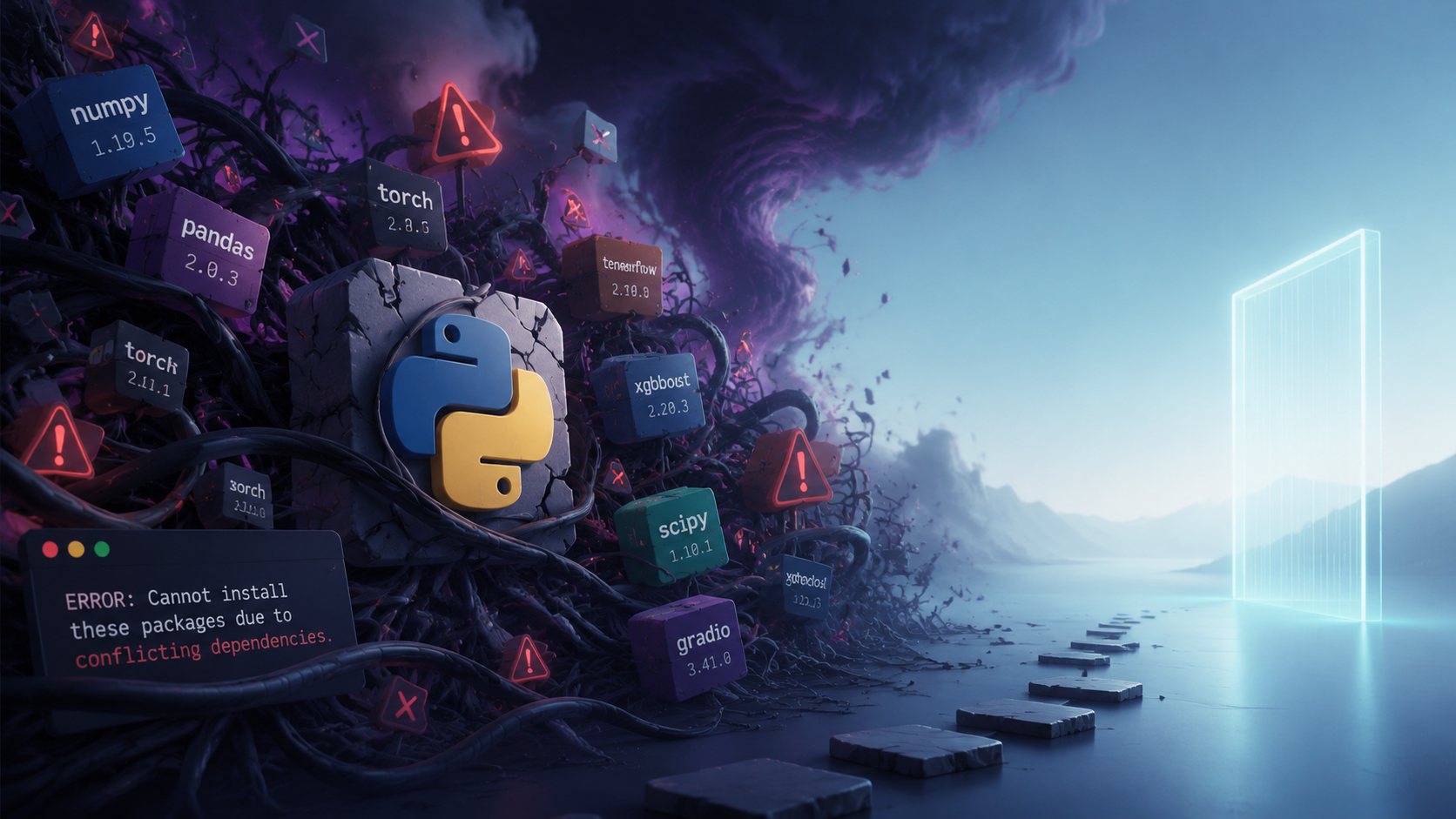
Developing open-source AI projects often begins with high hopes and ends in a tangled mess of conflicting library versions, broken virtual environments, and obscure runtime errors. Python dependency hell has become the silent killer of AI engineering productivity. Developers spend more time resolving `pip install` conflicts and debugging incompatible CUDA bindings than actually building intelligent workflows.
While setting up open-source agent frameworks manually provides deep technical insight, the operational overhead is severe. ClawLite changes this paradigm entirely. As a commercially optimized product layer, ClawLite abstracts away the environment configuration, offering a managed workspace where autonomous agents work out-of-the-box. Instead of wrestling with `requirements.txt` and system paths, you can focus on deploying commercial AI solutions instantly.
For developers still navigating the open-source ecosystem, understanding the root causes of Python dependency hell is essential.
1. Quick Definitions
Dependency Hell: A situation in software development where mutually exclusive package requirements prevent a system from functioning correctly. Virtual Environment (venv/conda): An isolated directory tree that contains a Python installation for a particular version of Python, plus a number of additional packages. ClawLite: A premium, zero-config AI product layer that eliminates dependency management by providing a fully managed, production-ready environment for autonomous agents. Package Manager (pip): The standard package installer for Python, often the central tool involved when dependency conflicts arise.
2. The Anatomy of a Dependency Conflict
In the AI ecosystem, projects rely heavily on complex libraries like PyTorch, TensorFlow, and LangChain. These core libraries have their own deeply nested dependencies. A typical conflict occurs when:
- Package A requires `numpy<1.24.0`.
- Package B requires `numpy>=1.26.0`.
When you attempt to install both in the same environment, the package manager fails to resolve the tree.
```bash
pip install langchain
pip install some-legacy-ai-tool
```
The resulting stack traces can be notoriously difficult to decode, often requiring developers to manually pin versions or use heavy containerization tools like Docker just to run a basic script.
3. Strategies for Mitigating the Nightmare
If you must manage dependencies manually, adopt these best practices:
Always use isolated environments: Never install AI packages globally. Use `venv`, `conda`, or `poetry`. Lock your dependencies: Use `requirements-lock.txt` or `poetry.lock` to ensure reproducible builds across different machines. Monitor CUDA and OS bindings:* Many AI dependencies interact directly with hardware drivers, meaning Python conflicts are often symptoms of deeper OS-level mismatches.
```bash python3 -m venv ai_env source ai_env/bin/activate pip install pip-tools pip-compile requirements.in pip install -r requirements.txt ```
4. The ClawLite Advantage
Managing these environments manually does not scale well in production or enterprise settings. The time spent configuring environments is time lost on actual product iteration.
Visual Comparison: Manual Open Source vs. ClawLite Managed
| Factor | Manual Open Source Setup | ClawLite Managed Layer |
|---|---|---|
| Setup Time | Hours to Days | Instant |
| Dependency Resolution | Manual debugging and pinning | Pre-configured and tested |
| Environment Isolation | Requires Docker or Conda | Built-in zero-config workspace |
| Maintenance Burden | High (constant updates break builds) | None (fully managed) |
| Primary Focus | Infrastructure and troubleshooting | Workflow and AI capability |
By adopting ClawLite, you bypass the dependency nightmare completely. The platform ensures that all necessary libraries, drivers, and frameworks are perfectly synced, allowing you to deploy agents that work flawlessly from day one.
5. Summary Q&A
Q: Can I use `conda` instead of `pip` to solve dependency hell? A: `conda` is better at managing binary dependencies and non-Python libraries (like C++ extensions for machine learning), but it can still suffer from slow resolution times and conflicts if environments aren't carefully managed.
Q: Why do AI projects seem more prone to these issues than web development? A: AI frameworks often rely on specific hardware bindings (like GPU drivers) and have deeply intertwined scientific libraries (NumPy, SciPy) that update at different cadences, creating a fragile matrix of compatibility.
Q: Does ClawLite support custom Python packages? A: Yes, ClawLite provides a streamlined, conflict-free way to extend agent capabilities while maintaining the stability of the core managed environment, giving you the best of both worlds.
Q: How much time can an engineering team save by avoiding dependency management? A: Teams often report saving up to 20-30% of their development cycles by moving away from manual environment debugging and adopting managed solutions like ClawLite.