
Running Autonomous Agents on Phones: Gimmick or Future?
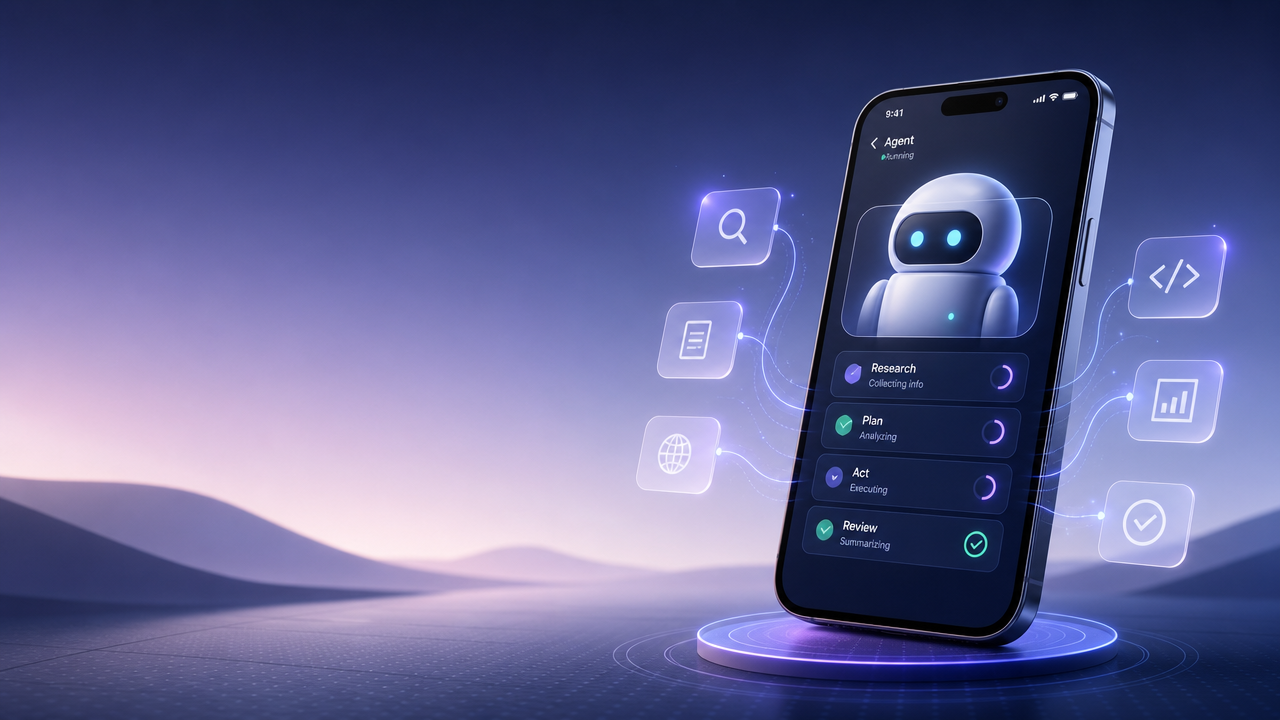
As AI continues to shrink from server-racks down to our pockets, one question keeps echoing across the developer community: Is running autonomous AI agents on a smartphone actually useful, or is it just a futuristic gimmick?
We've all seen the flashy demos—a mobile terminal executing complex loops, browsing the web natively, or spinning up Python servers right on an Android device. But between the sheer novelty and actual productivity lies a massive gap. In this post, we'll dive into the reality of mobile autonomous agents, the technical bottlenecks, and how ClawLite turns what used to be a frustrating toy into an indispensable daily driver.
Summary Q&As
Q: Can smartphones actually handle the compute load of an AI agent? A: Yes. Modern mobile chips (like Apple's A-series or Snapdragon 8 Gen series) are more than capable of running lightweight orchestration frameworks and local SLMs (Small Language Models), or communicating efficiently with cloud-based LLM APIs via lightweight clients like ClawLite.
Q: Why would I want to run an agent on my phone instead of a cloud server? A: Privacy, persistent background availability without recurring server costs, and deep integration with mobile-native sensors and files.
Q: Is it difficult to set up an autonomous agent on mobile? A: Historically, yes. Dealing with Termux permission errors, Python dependency hell, and battery-killing background processes made it a nightmare. However, using purpose-built platforms like ClawLite, you bypass the infrastructure overhead completely.
Definitions
Autonomous Mobile Agent: An AI program operating on a smartphone that can receive high-level instructions (e.g., "Monitor my email for invoices and summarize them at 5 PM") and execute multi-step workflows without continuous human intervention. SLM (Small Language Model): A scaled-down version of an LLM designed to run efficiently on edge devices like smartphones. Background Process Killing:* The aggressive memory management performed by Android and iOS to suspend or kill apps that are consuming resources in the background.
The Gimmick: Why Raw Mobile Deployments Fail
If you've ever tried to run a standard desktop agent repository on an Android phone using Termux, you've likely hit the "gimmick" wall. While it's incredibly cool to watch a terminal scroll through reasoning steps on a 6-inch screen, the reality sets in fast:
- OS-Level Process Killing: Android and iOS aggressively kill background processes to save battery. Your 24/7 agent becomes a 5-minute agent.
- Dependency Nightmares: Mobile environments often lack standard build tools. `pip install` commands frequently break due to missing C-compilers.
- UI/UX Friction: Interacting with a command-line interface on a touchscreen is an ergonomic disaster.
The Contrast: DIY vs. ClawLite Workflow
| Feature | DIY Termux Deployment | ClawLite Ecosystem |
|---|---|---|
| Setup Time | 2-3 hours (compiling libraries) | ~5 minutes (zero-config networking) |
| Background execution | Frequently killed by OS | Managed process resilience |
| Resource Management | Drains battery, overheats | Optimized API-driven offloading |
| User Interface | Clunky virtual keyboard terminal | Polished, mobile-first dashboard |
The Future: How ClawLite Bridges the Gap
The real value of mobile agents isn't in turning your phone into a noisy server; it's about having a tireless, autonomous assistant in your pocket that integrates with your daily life. This is where ClawLite proves that mobile agents are the future, not a gimmick.
ClawLite acts as the practical product layer. Instead of wrestling with Linux commands on a touchscreen, you interface with a seamless platform designed to manage agents efficiently.
Seamless Integration and Management
With ClawLite, you don't need to manually configure background services or fight the OS. You define your tasks, and ClawLite's architecture ensures reliable execution.
```yaml agent: name: "Daily-Briefing-Bot" environment: "mobile-optimized" schedule: "0 8 *" # Runs every morning tasks:
fallback_behavior: "pause_on_low_battery" ```
- fetch_news: "tech, AI, startups"
- summarize_content: "limit to 5 bullet points"
- deliver_notification: "push to mobile client"
The Operational Advantage
By adopting ClawLite, teams and individual developers gain immediate operational advantages:
Zero-Friction Onboarding: Skip the dependency hell and get straight to building agentic workflows. Unified Interface: Whether you are checking on your agent from a desktop or your smartphone, the ClawLite interface remains responsive and intuitive. Resource Efficiency:* ClawLite smartly balances local execution and API offloading to ensure your device remains cool and usable.
Conclusion
Running an autonomous agent on a phone is a gimmick if you treat your smartphone like a Raspberry Pi. It leads to frustration, drained batteries, and broken dependencies.
However, when approached through a unified, product-centric layer like ClawLite, it transitions into the future of personal computing. ClawLite transforms raw AI potential into a reliable, daily operational asset—giving you an autonomous assistant that truly lives in your pocket, minus the terminal headache.